Seasons of Recovery: What Autumn Teaches Us About Steps 4–7
Every autumn the trees do something the rest of us spend years learning in recovery: they let go. They do not fight the season. They take stock of what summer gave them, release what they no longer need, and trust that what is underneath will hold through the winter.
That is a pretty good description of Steps Four through Seven. It is also why so many sponsees finally sit down and write their 4th Step inventory in the fall. The days get shorter, life moves indoors, and there is room to be honest on paper. This post walks through what autumn can teach us about each of these four Steps, with a little AA history, a few short lines from the Big Book and a simple seasonal rhythm sponsors can use.
Why Steps Four Through Seven Belong Together
Here are the four Steps as they appear in the Big Book on page 59:
Step 4: Made a searching and fearless moral inventory of ourselves.
Step 5: Admitted to God, to ourselves, and to another human being the exact nature of our wrongs.
Step 6: Were entirely ready to have God remove all these defects of character.
Step 7: Humbly asked Him to remove our shortcomings.
Many people treat the 4th Step as a stand-alone project, something to survive and then put in a drawer. The Big Book does not. It moves straight from the inventory instructions (pages 64 to 71) into sharing that inventory with another person, becoming willing and asking for help with what we found (pages 72 to 76). Taken together, these four Steps form one cycle: look honestly, say it out loud, become ready, ask humbly.
Autumn and the 4th Step Inventory: Taking Stock at Harvest
Fall is harvest time. For generations, families counted what was in the barn before the first frost so they would know exactly what they had to work with. Nobody counted the harvest to feel bad about it. They counted it so they could plan.
That is the spirit of the word inventory as the Big Book uses it. In the 1930s it was a shopkeeper's term, and the book makes the comparison directly:
"Taking a commercial inventory is a fact-finding and a fact-facing process." (p. 64)
Fact-finding, not fault-finding. The book then points to the place most of us need to start:
"Resentment is the 'number one' offender." (p. 64)
The inventory covers three areas: resentments, fears and our conduct in relationships. For resentments, the Big Book shows a simple set of columns: who we are resentful at, the cause, and what it affected in us. Then comes the turn that changes everything, when we set the other person's wrongs aside and look at our own part. The book asks it plainly:
"Where had we been selfish, dishonest, self-seeking and frightened?" (p. 67)
If you or your sponsee want worksheets laid out the way the book describes, our 4th Step Inventory Packet is a Big Book companion for Steps 4, 6 and 8. For a full walk-through of the method, see How to Do a Complete AA 4th Step.

Step 5 in the Season of Sharing
Autumn is the season of shared tables: harvest suppers, Thanksgiving dinners, long talks on the porch before it gets too cold. Step Five is our version of that table. We bring what we wrote down and we share it with another human being.
The Big Book is direct about why:
"If we skip this vital step, we may not overcome drinking." (p. 72)
On that same page, the book notes that a solitary self-appraisal usually is not enough. We need someone else to hear it. This idea has deep roots. The Oxford Group, the Christian fellowship that both Bill Wilson and Dr. Bob Smith were connected to before AA had a name, practiced a kind of personal sharing and confession. When the early members in Akron and New York wrote the Steps, they kept the heart of that practice and made it simpler and more open to everyone.
What happens after a thorough Fifth Step is one of the quietest promises in the book:
"We can be alone at perfect peace and ease." (p. 75)
Sponsors, this is where your own experience is the gift. Tell your sponsee what your Fifth Step was like. Tell them you are not shocked easily. Then mostly listen.
Step 6: Bare Branches and Becoming Ready
By November, a lot of trees are bare. It can look like loss, but it is actually preparation. The tree is getting ready for what comes next.
Step Six can feel the same way. After the inventory and the Fifth Step, we can see our defects clearly, and some of them have been with us so long they feel like part of who we are. Being entirely ready to let them go is not something we can force. The Big Book offers a gentle way through:
"If we still cling to something we will not let go, we ask God to help us be willing." (p. 76)
That is it. Not perfect readiness on day one. Willingness to become willing. The 12 & 12 gives this Step a whole essay of its own, and many sponsors read it alongside page 76 with their sponsees.
Step 7: Humility as the Days Get Shorter
Here is a small piece of word history that fits the season. The word humility shares its Latin root with humus, the rich soil that forms when fallen leaves break down. Humility, in that sense, is not about being low. It is about being grounded, close to the earth, and ready to grow something new.
The Big Book's Seventh Step prayer begins with a line many of us know by heart:
"My Creator, I am now willing that you should have all of me, good and bad." (p. 76)
Notice the words good and bad. We do not have to clean ourselves up before we ask for help. We bring the whole harvest.
A Simple Autumn Rhythm for Steps 4–7
Every sponsee moves at their own pace, and nobody should rush a 4th Step inventory to hit a calendar date. Still, many sponsors find a loose seasonal plan helps people get started instead of waiting for the perfect moment:
October: Write the inventory. Resentments first, then fears, then relationships. A little every day beats one marathon weekend.
Early November: Sit down with your sponsor for Step Five. Plan for an unhurried block of time and a private place.
Mid-November: Spend an hour alone with Steps Six and Seven, as the Big Book suggests on page 75, and say the Seventh Step prayer.
Thanksgiving onward: Carry that gratitude into Step Eight and begin your list of people harmed.
Moving through these Steps in the fall means a sponsee can head into the holidays lighter than they have felt in years. That is a real gift during a season that can be hard on people in early sobriety.
Tools for the Season
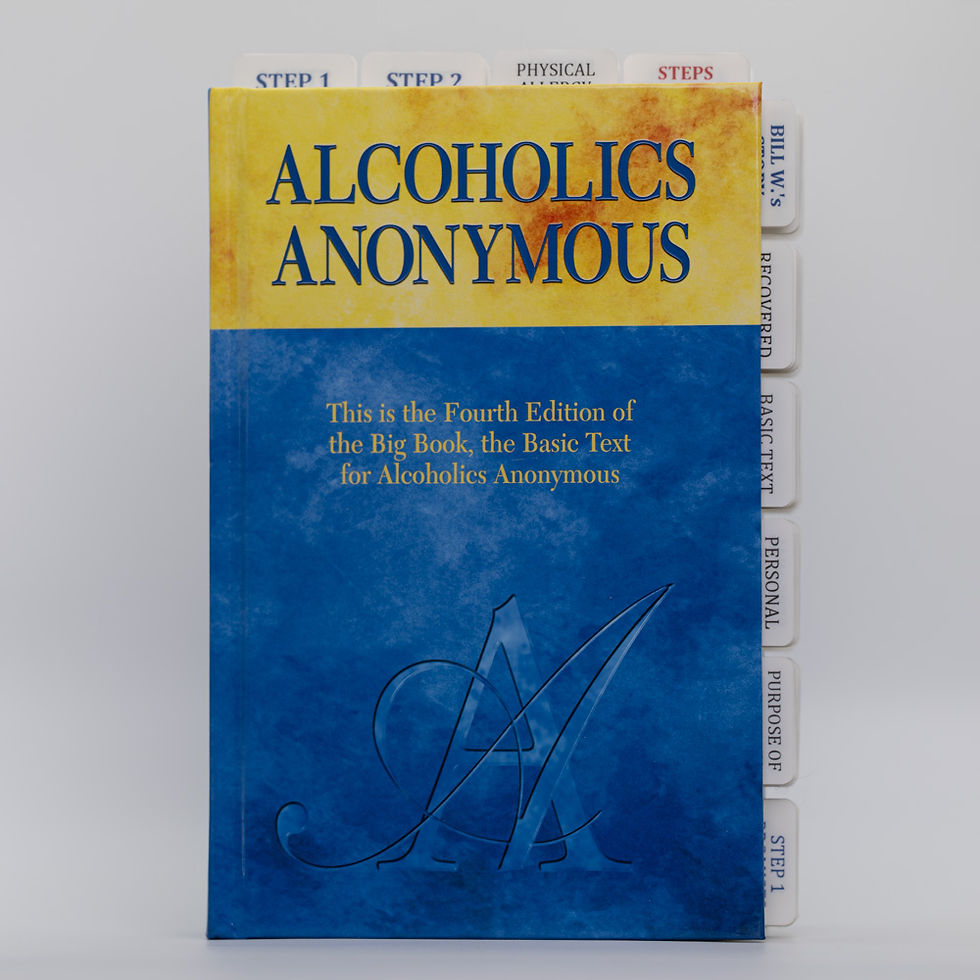
Some sponsees like to keep their inventory, their Big Book and their notes together in one place. Our large print AA Big Book, highlighted and AAmazingtabbed includes 144 laminated, pre-labeled tabs, so pages 59, 64, 72 and 76 are always one flip away, and the color-highlighted passages make it easy to find the lines your sponsor points you to.
On the go, the AABluebook app puts recovery reading and a 1930s dictionary in your pocket. On iOS, code FREEMONTHFL gives you a free month and 3FREE gives you three. For a printable version of the method, our 4th Step inventory worksheet guide is a good companion.
Frequently Asked Questions
How long should a 4th Step inventory take?
There is no set timeline. Many people write their inventory over a few weeks. The Big Book's own direction is to be thorough, so a sponsor's job is to keep momentum without rushing.
Do I have to do my Fifth Step with my sponsor?
The Big Book says another human being, and it discusses choosing that person carefully on pages 73 and 74. Many people choose their sponsor; others choose a clergy member or another trusted person. Talk it over with your sponsor.
What if I do not feel entirely ready in Step Six?
That is normal. Page 76 suggests asking for help to become willing. Readiness tends to grow as we keep working the Steps.
Why do Steps Four through Seven go together?
In the Big Book they flow as one continuous set of instructions, from the inventory on page 64 through the Seventh Step prayer on page 76. Doing them close together keeps the momentum of honesty going.
Is the 4th Step Inventory Packet based on the Big Book?
Yes. It is designed as a Big Book companion for Steps 4, 6 and 8, following the book's own approach to resentments, fears and relationships.
Autumn does not ask the trees to be perfect. It just asks them to let go when it is time. May this season be that time for you, one honest page at a time.
AAmazingtabs is not affiliated with Alcoholics Anonymous World Services.


Comments